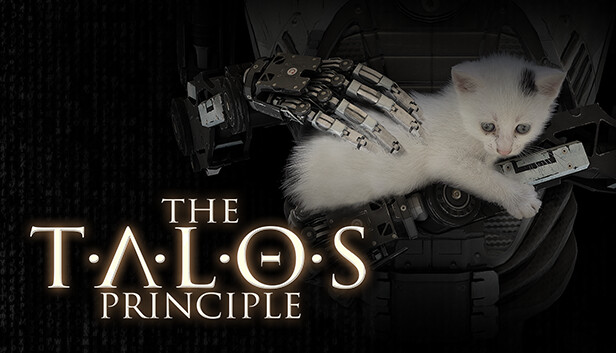
Game:The Talos Principle
Genre:Puzzle
Platforms:PC, Nintendo Switch, Ps4, Ps5, Xbox One
BRIEF SYNOPSIS
The Talos Principle is a first-person puzzle game developed by Croteam, in which you play as an artificial intelligent robot. The player must solve puzzles in a virtual world where, apparently, humanity has become extinct, and only AI robots remain, living in a constructed environment. The player controls the robot and guides it through a series of puzzles, while also encountering philosophical questions related to the meaning of consciousness and existence, in order to discover the truth.
FIRST IMPRESIONS
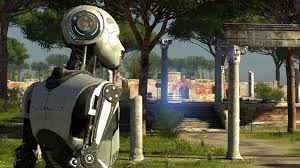
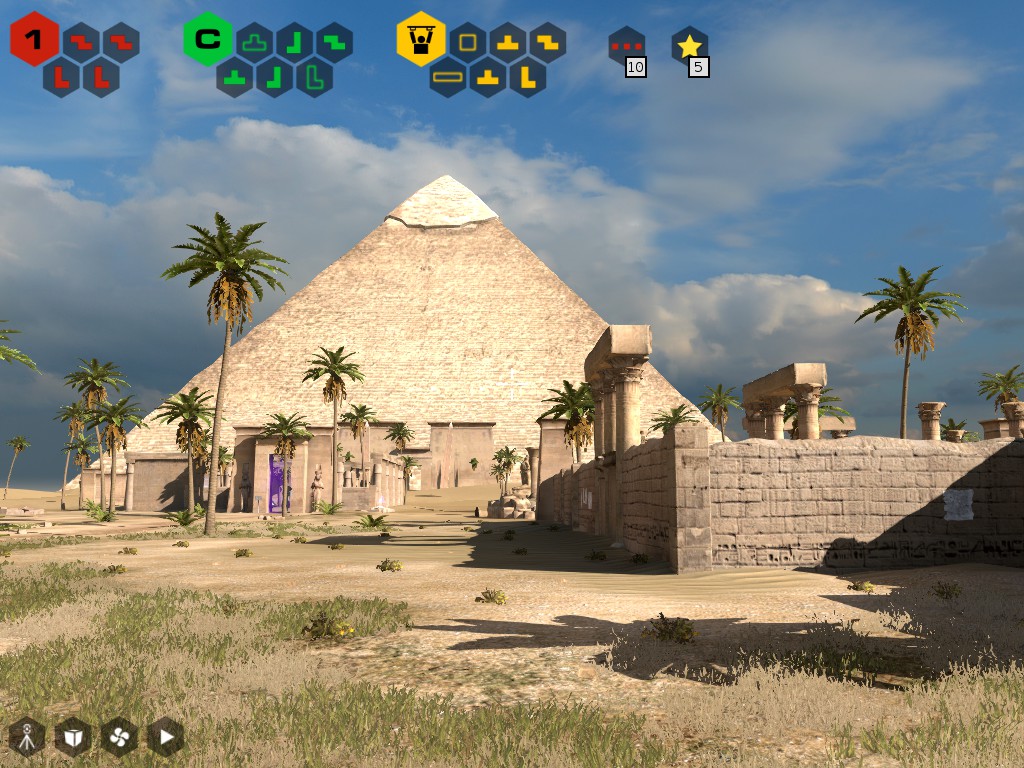
At first the the first thing that stood me out the enviroment and atmosphere, the game miz acient ruins with a futuristic tecnology which create a surreal feeling, the game shapes its narrative around the eponymous philosophical concept, that explores the temporariness of life and what make person a person.
CORE MECHANICS
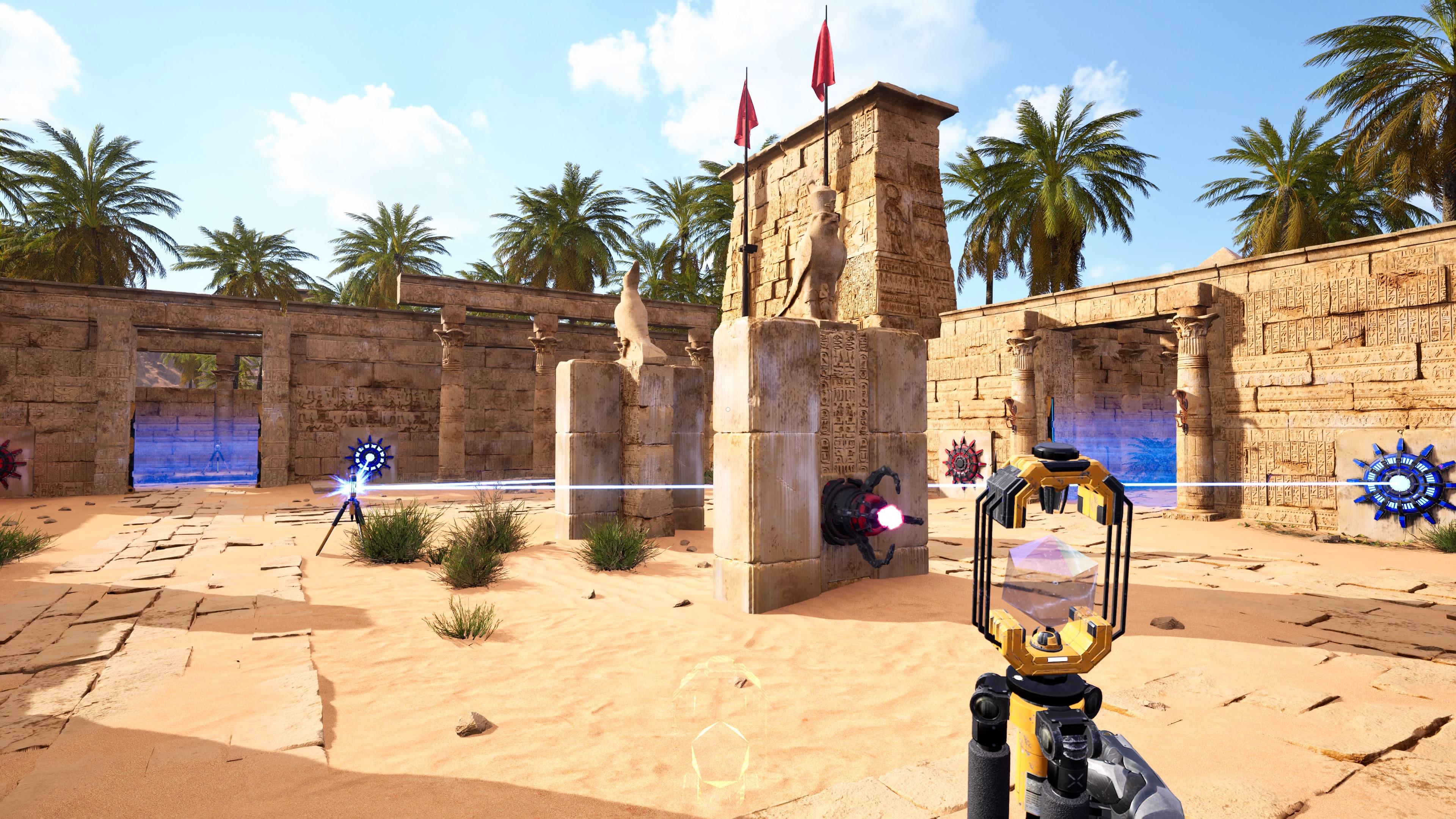
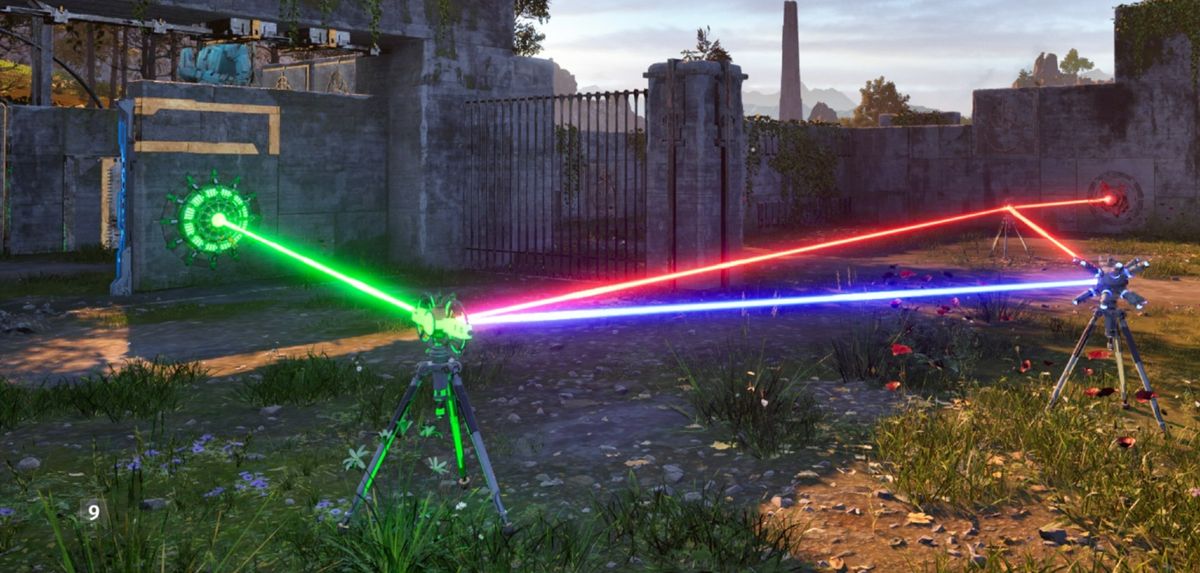
The gameplay is mainly about solving puzzles sort of like portal stileshi, using tools like lasers, connectos, jammers, and movable objects like boxes and movable objects like boxes. The player must redirect laser beams, and disable obstacle and position objects correctly in order to collect a series piece-key to unlock the main tower. The mechanics are simple at first but are getting more complex during the game progress and new elements are introduced.
NARRATIVE AND PHILOPHICAL BACKGROUND
The narrative goes around of philosophical ideas introduced litle by litle, such as, what is counsciousness, identity, being and essence of things, the game explore what means to be human, the possibility of IA to be conscious, and if the free will really exist. The story is ilustrated through a series of text log computer, audio recording, delivered by the Elohum. This element gather together a give a great philophical-puzzle games to reflect about life and existence. The game questions authority and make choices.
UI, Visual, and Audio
The UI is very minimalistic and does not interrupt the player at any moment, which makes the experience feel smooth. Visually, the game reflects a mix of natural elements, such as forests, combined with a very peaceful background music, which fits well with its philosophical background. It helps the player reflect on philosophical questions and puzzle-resolving, making the experience feel somewhat like a meditation.
The soundtrack of The Talos Principle was composed by Damjan Mravunac, in which blend orchestral and electronic elements to create enviromental music that fits both emotional depth and atmospheric world-building, which is mostly ambient and reflective what fit so good with theme of game.
PLAYER EXPERIENCE
When I played this game feel satisfaccion in resolving the puzzle, it felt really rewarding especially after spending some time figurinng out. The philophical background add depth inspiring the player to reflect.
RULES AND BALANCE
The rules and balance are consistent and straightforward, the game intruduced the mechanics gradually and allows to learn through practise. In my opinion almost all puzzel are kind of easy and intuitive if you have play puzzle games before though some can challenging but in general are pretty straight forward. Overall, the level of difficulty is balanced, giving and bit of difficulty at the end.
DESIGN REFLECTION
I reckon that this game is not good because the puzzle or the game mechanics itself since are really "elemental", I think it is because this game game naile in the way it tell the story with the philophical background giving to the player to think to reflect and resolve the puzzles at their own pace. Even though some parts can feel very repetive sometimes, it could be resolve adding more puzzle tematics.
CONCLUSION
In general, The Talos principle is well-designed video-game, that made to reflect in some deep philophical topics and force myselft to resolve logical problems. I highly recommend it for players who liked Portal and Portal 2, as it involves solving logical problems and transcendental narratives.